


Welcome to The SciArt Curator, your bi-weekly window into the vibrant intersection of science, art, and society.
Part treasure hunt, part investigation, it also grows with your discoveries. If you’ve created or come across a project, call, or event that bridges science and art, drop me a line. I’d love to hear from you and join forces to spread the word.

Curator’s thread
Scientists and artists were both curious about working with one another. They just didn’t know how to get started. Once we created a space for that to happen, the excitement was contagious - Bethan Burnside, science communicator and curator in science, art, and health.
Bethan, a neuroscientist-turned-science communicator and curator, has been creating connections between scientists, artists, and lived experience experts, and the results are truly inspiring.
Currently Senior Science Communicator at the VIB–KU Leuven Center for Brain & Disease Research, Bethan draws on their background in psychology and neuroscience to open up a dialogue and build bridges between disciplines through collaborations between artists and scientists. Their journey is a powerful example of how SciArt can become transformative when guided by curiosity, courage, and personal experience.
Our conversation captured so much of what makes SciArt special for me: creating a space where unexpected intersections can spark something entirely new.
A self-initiated SciArt project became one of the key reasons Bethan landed their current role — a reminder that experimentation, initiative, and authenticity matter.
In our interview, Bethan mentioned something key for emerging sci-artists and curators: Start small. Start imperfectly. Start with what you have. Learn by doing, failing, and trying again — until your work opens doors.
I’m incredibly grateful for this inspiring conversation and for the insight Bethan brought into how art can transform the way we connect with science and health.
And, as always, you’ll also find a curated selection of upcoming SciArt events in this issue. Now, let’s dive in!

Bridging science, art & lived experience: insights from Bethan
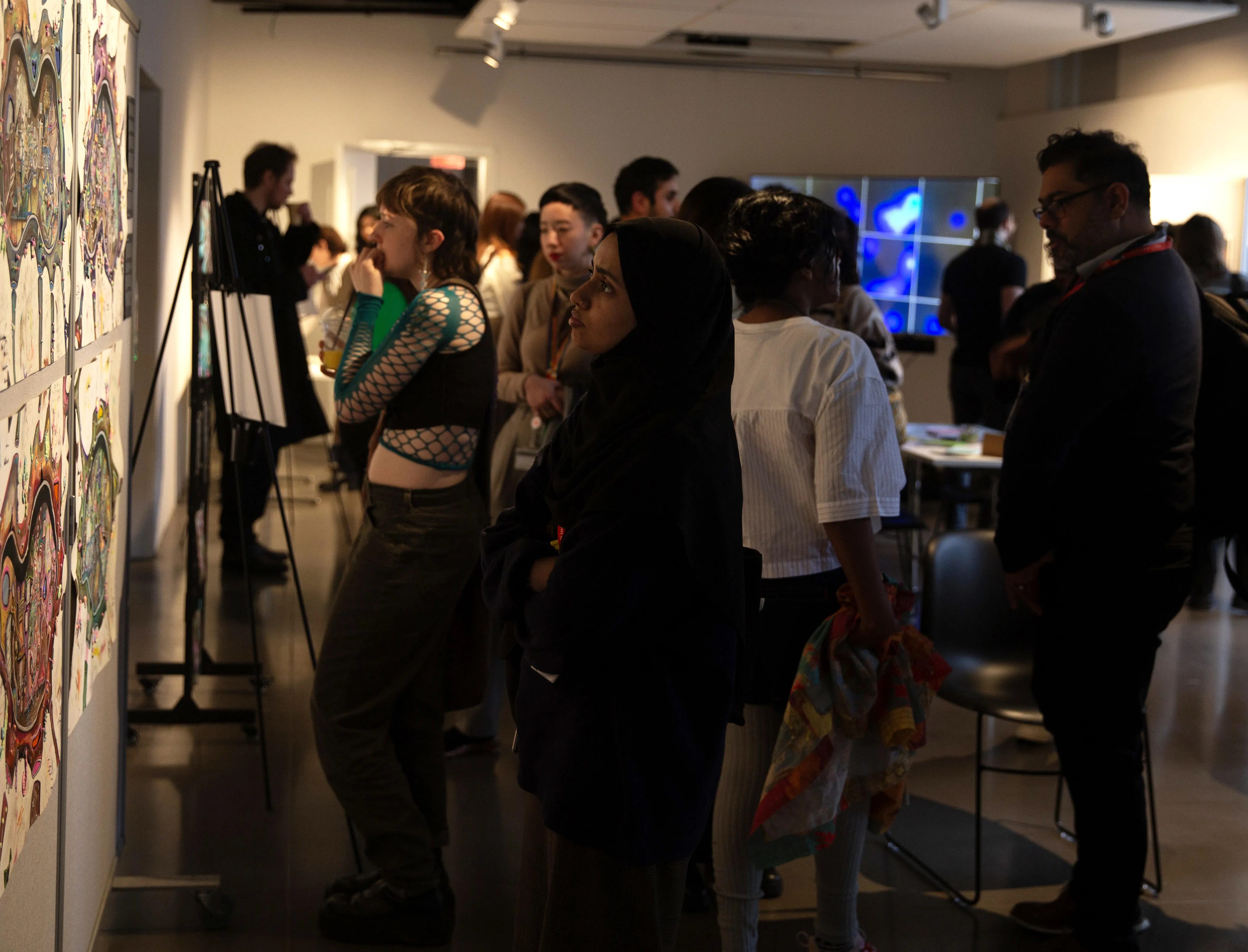
Bethan is a Senior Science Communicator at the VIB-KU Leuven Center for Brain & Disease Research in Belgium, and an organizing member of the center’s Inclusion & Diversity Committee. They also founded and managed NeuroArt, an initiative which paired neurodivergent artists with neuroscientists at King’s College London to bridge the gap between living experience and academic research, culminating in an exhibition at Workshop Space, Science Gallery London.
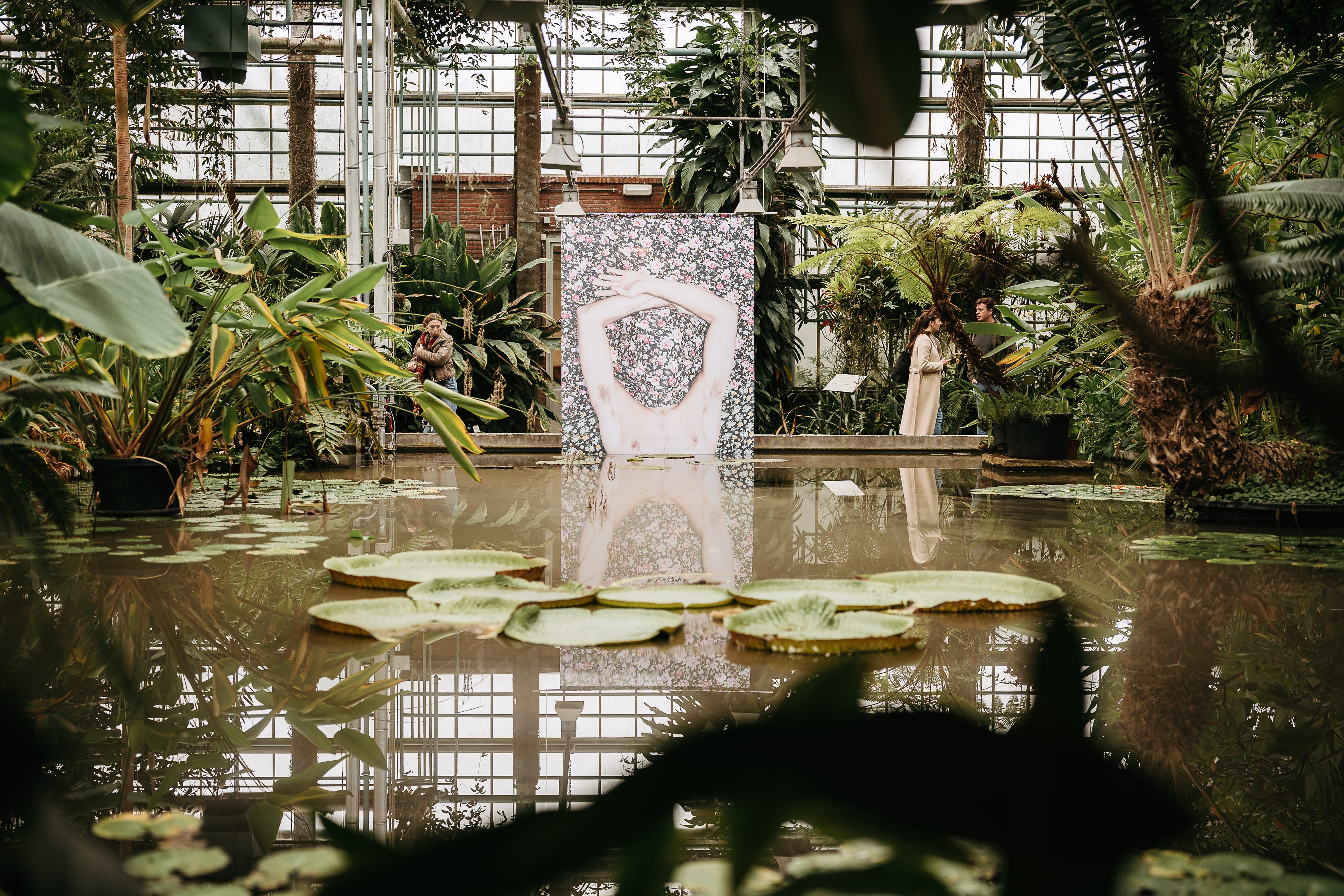
Finally, they’re a curator in science, art, and health, working on a wide range of projects, including (UN)SHAME, currently on show at GUM Museum, the ‘Forum for Science, Doubt & Art’ in Ghent, Belgium.
In this interview, Bethan shares their pathway in SciArt and some of their projects.


Bethan, your path spans psychology, neuroscience, science communication, and now curation at the intersection of science, art, and health. How did your interest in SciArt first emerge along this journey?
Bethan: When I was in my third year of my undergraduate degree, I visited the Wellcome Collection in London for the first time, and was literally blown away. By that point, I already knew that I wanted to study neuroscience for my Master’s — but at the same time, ever since I was a kid, I could remember telling everyone I was going to be an artist when I grew up. So, I always had a mix of these two sides of me, but I had no idea how I was going to integrate all of that into a career because I didn’t know of any examples of anyone doing both. Visiting the Wellcome and seeing SciArt pieces for the first time opened my eyes to a whole new realm of possibility. I remember going home from that exhibition and immediately emailing my university’s Student Union to ask if I could organize a neuroscience-art exhibition there. And they let me do it. This small exhibition became the prototype for the larger-scale ‘NeuroArt’ project I would create a few years later. Through this experience, I realized how much art can facilitate links between research and human experience, and what a great tool it was for fostering dialogue between different groups of people with vastly different identities and life experiences. But I mentally parked it, and I didn’t do anything with it for a couple of years as I invested all my time and energy into studying to become a neuroscientist.
Your PhD journey intersected with a personal Attention Deficit Hyperactivity Disorder (ADHD) diagnosis, revealing a striking disconnect between how the neurodivergent community sees itself and how biomedical research frames it. How did art help you navigate and connect these two worlds?
Bethan: Early on in my PhD in Biomedical Sciences, I was diagnosed with ADHD. Because I was working in a lab that was studying the genetic basis of neurodevelopmental conditions, I found myself in a unique position to compare and contrast the stark differences between how the biomedical community versus neurodivergent community frame neurodiversity. I realized that while the biomedical community typically viewed neurodiversity as an internal deficit that should be cured or fixed, my newfound neurodiversity community tended to perceive neurodiversity as an integral part of our identity — one that many of us are really proud of.
This massive dissonance led me to revive the NeuroArt project that I’d created years before, remembering how it had held space for intimate conversations and promoted understanding. Once the idea came into my head, I quickly decided to go for it, without any kind of funding or framework for how to go about it. I literally posted a message on LinkedIn sharing the idea, basically asking: Is there anyone who’s audacious enough to join me? Surprisingly, loads of people reached out to me who were keen —people I’d never met in real life, expressing their interest in getting involved. We ended up starting this project that paired neuroscientists at King’s College London with artists who identify as being neurodivergent. They created art pieces to spark a dialogue about the value of lived experience in the biomedical sciences, which were shared through an interactive event at Workshop Space, Science Gallery London. So, that was the first big project that I did, and I haven’t really stopped thinking about it since.
And that confirmed that there was an interest and a need to bring these worlds together…
Bethan: Yes! I soon realized that people were really excited about this kind of initiative, and that excitement was contagious. It turns out scientists were really interested in collaborating with artists and were so grateful that we had approached them. They shared how they’d been thinking about doing something like this for a long time, but didn’t know how or where to start. At the same time, artists expressed the same — that they had been wanting to work with scientists but had no idea who to contact or how to get into that sphere. So, these two worlds were very curious about each other, but just didn’t know how to approach one another or how to get involved.
There was so much interest in that project, in fact, that it was way more than our team of volunteers could manage, and we ended up having to turn several opportunities down. Through NeuroArt, I realized, “Okay, we’re really on to something here,” and it nudged me into parkouring professionally.


Digging into the transition from neuroscience into science communication and curating SciArt projects, which skills transferred naturally, and which new ones did you develop along the way?
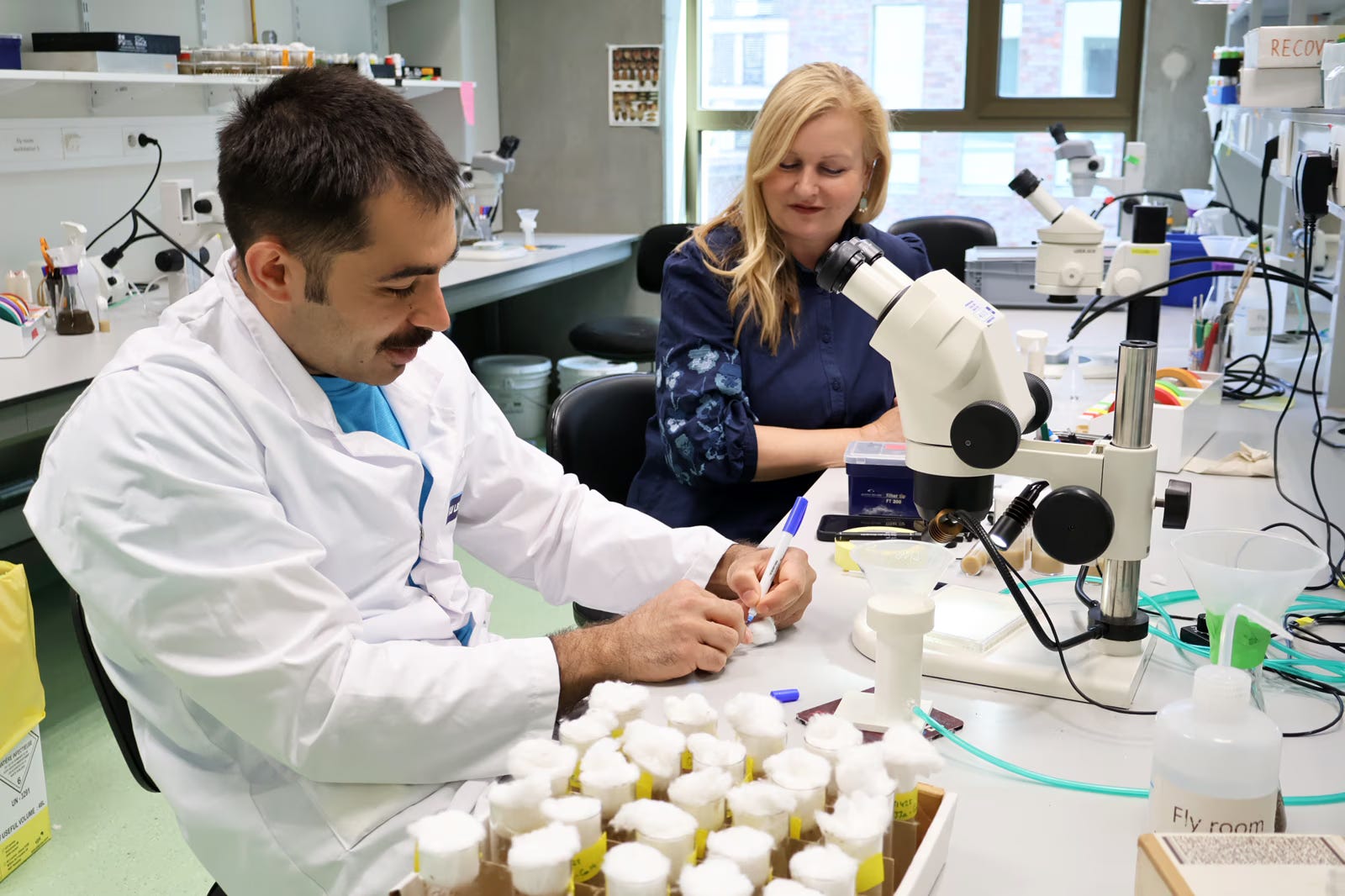
Bethan: Looking back, I realize that whatever research position I had, I was always the person who was taking on board some of the communication aspects as well. I would always be volunteering to build the labs’ website, do their social media, contribute to their blogs, and stuff like that. But the main thing that helped to hone in a lot of interests and skills I needed for the transition was this art exhibition that I created. I started NeuroArt completely from scratch, and by the end of the project, I was coordinating a group of around 30 people: volunteers, partners, team members, scientists, and artists. That was a really steep learning curve, as I had to learn how to do everything — from creating a SciArt collaborative framework, to promoting, marketing, and organizing events, and everything in between — from start to finish. I’d love to shout out to Keshvi Shah and Shaakir Salam, who were my ride-or-die NeuroArt core team during this period. We learnt everything by doing and really supported each other through it all.
So, you really learned by doing. That’s amazing. I guess it’s the best way to go.
Bethan: I think it’s the only way to do it. You know, you’re never going to be perfect, and you’re never going to already have all of the expertise that you need to do something the first time around. To a certain extent, you’re always going to have to throw yourself in somewhere, somehow, and if you can’t get those skills or experiences through a formal professional or educational setting, then you might just have to start something yourself.
I’m now a Senior Science Communicator at the VIB-KU Leuven Centre for Brain & Disease Research, and the NeuroArt Exhibition is a big part of why I got that position. Through that project, I was able to show them the competencies I’d gained through spearheading that, all of which were really relevant to the role that I was applying for. I think it really helped that I was able to present my future managers with very tangible evidence of what I could achieve.
I’m very curious about your current position at the VIB-KU Leuven Centre for Brain & Disease Research. Arts were not part of the original job description. How did you introduce art into your work, and how has the institution supported this direction?
Bethan: My current position as a science communicator at a neuroscience research center involves wearing many different hats: I do everything from creating written and audiovisual projects to organizing outreach and engagement events, to community-building and fostering exchange between a wide variety of stakeholders. But already in my first year on the job, I suggested another art project to them: a mural for the center’s foyer, the first space that greets visitors when they enter the building. For this, I commissioned artist Júlia Mota Albuquerque from Brazil to come and work in close collaboration with the center’s Inclusion and Diversity Committee. The mural embodies the center’s dedication to breaking barriers and widening participation in neuroscience. When I raised the idea with my managers, they were incredibly supportive. The mural is still in the foyer and has brought so much vibrancy to the center.
About two years into the job, I went from full-time to part-time in order to undertake a Curatorial Studies postgraduate program at the Royal Academy of Arts in Ghent. Again, my managers were very supportive and flexible in arranging my schedule to accommodate my professional growth. Once I finished my postgrad, I came back with a new idea: an art-science residency with Anna Dumitriu, an internationally acclaimed BioArtist and an absolute pioneer in the field. Again, they told me, “We love it. Just go for it!”
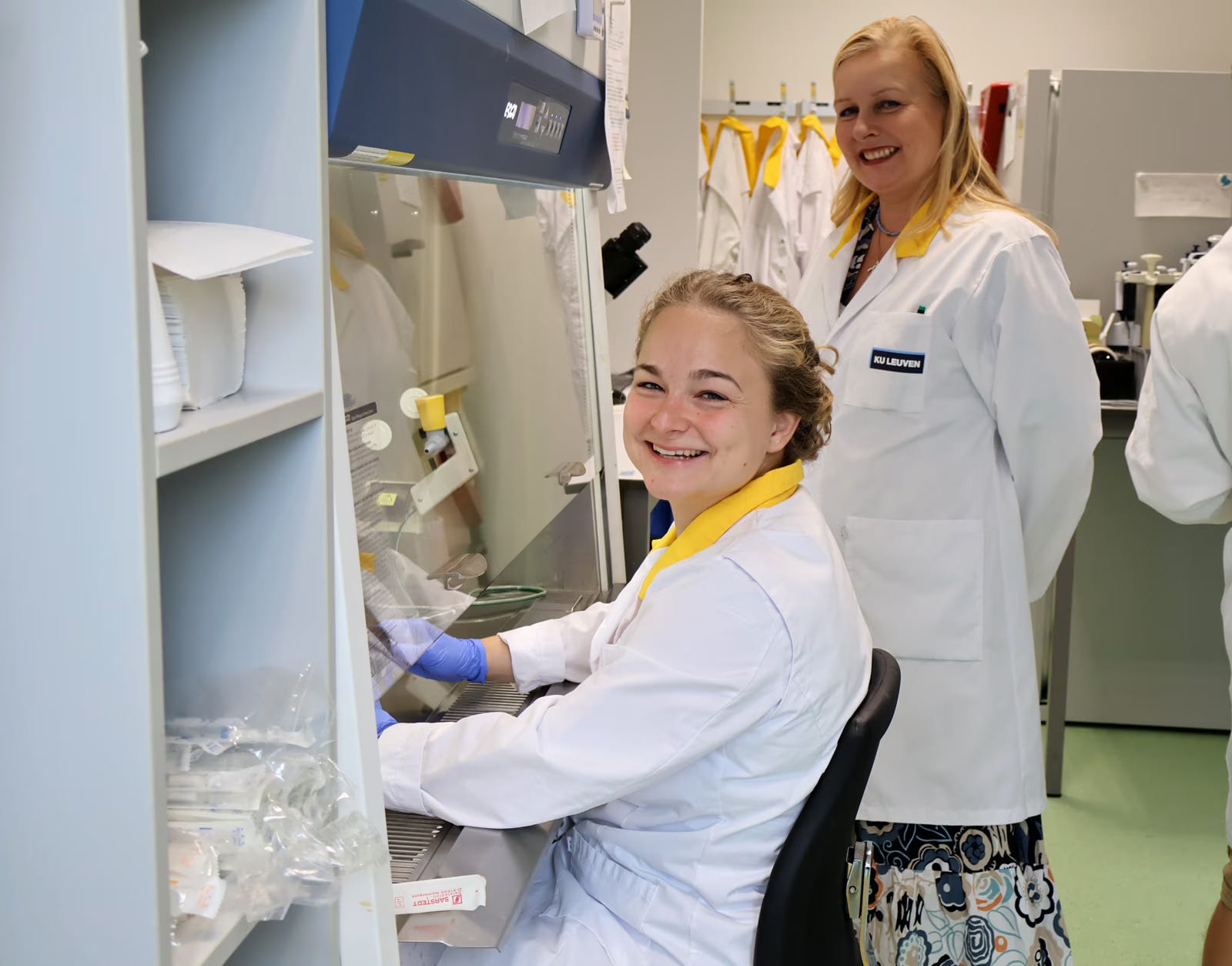
Since then, Bethan has been curating the art-science residency with Anna Dumitriu, a British artist working at the intersection of art, microbiology, synthetic biology, and ethics. Anna made her first visit to the VIB-KU Leuven Center for Brain & Disease Research in August this year, where she personally interacted with over 40 researchers and gave a lecture to the entire center on her BioArt journey. Bethan recently interviewed Anna about her professional career path, as well as her experience of the residency’s kick-off. Check out the interview and get to know more about Anna’s work here.
Your projects often sit at the crossroads of science, art, and health. What motivates you to work in this space, and where do you find inspiration to continue building these bridges?
Bethan: I think I have endless sources of inspiration and motivation! One major source is seeing the impact and the reception that this approach has on amplifying marginalized experiences. That always energizes me to keep going.
More specifically, the motivation behind the “health” facet of this intersection is rather personal. I work as a steering committee member in the Non-Communicable Diseases Lab at the World Health Organization (WHO), where I weigh in on decisions concerning the development of promising grassroots initiatives tackling NCDs in low-resource settings through the lens of my own lived experience of long-term health conditions. This lens has also driven me to get involved with community-led art projects such as an installation I co-developed for Erasmus MC hospital in Rotterdam, which collected lived experience expertise from patients with the intention of collectively building a repository of spoonie wisdom and breaking down barriers between medical professionals and the people they aim to serve. That’s what keeps me going — knowing that these projects open doors for conversations that really matter.

Upcoming SciArt events and calls
— Digital Cosmos. 21 — 22 Nov 2025 | Amsterdam, Netherlands
A two-day forum bringing together visionary artists, thinkers, and technologists to collectively navigate the convergences of artificial intelligence, life, and art.
— European Media Art Festival. 22 — 26 April 2026. Deadline for entries is 22 December 2025 | Osnabrück, Germany
Media artists from around the world can now submit their work for consideration at the 39th European Media Art Festival. The exhibition at Kunsthalle Osnabrück will continue beyond the festival, closing on 25 May 2026.
— Museum of Beadwork challenge: Microbes & Mushrooms. Submissions till May 1st, 2026 | USA, Portland
The Museum of Beadwork invites artists to create pieces that introduce audiences to the microbial realm. This is an international competition, and all entries must evoke the challenge theme for this year: Microbes & Mushrooms: Nature’s artistry in detail.

Let’s keep on co-creating this newsletter together
Since launching The SciArt Curator, I’ve been truly blown away by how quickly this community has started shaping the project.
So let’s keep going: If you’ve created, seen, or heard of a project that bridges science and art, please send it my way! I’d love to feature them and help spread the word. I am also happy to connect scientists with artists and storytellers exploring SciArt projects.
If this post was useful and something resonated with you, please forward it to a friend!
Thank you for reading, and see you in two weeks 💛
Loved it! Thanks for sharing Bethan's amazing journey.
PS: Here I am, visualizing the day in which I get to read about your own SciArt curator story, Ana!